
Blog
The Real Story of Kamalia Khaddar: Heritage, Handlooms, and History Before 1980.

For decades, the name Kamalia Khaddar has been more than just a label on a bolt of cloth. It is a whisper of Punjab’s rural soul, a testament to the skill of artisan fingers, and a story that begins long before the brand was formally established in 1980. To truly understand the fabric that has become a staple in Pakistani wardrobes, we must travel back to a time before machines hummed loudly, when the looms of Kamalia city were powered by human hands and generations of inherited wisdom.
This is the real story of Kamalia Khaddar—a narrative of indigenous cotton, local terminology, and the incredible journey from a small farm to a cherished piece of clothing.
What Was Kamalia Khaddar Called Before 1980? Understanding the Local Lingo
Before “Kamalia Khaddar” became a registered and recognized name, the fabric and its variations were known by simple, functional names in the local Punjabi and Saraiki dialects. The people of the region didn’t just buy “fabric”; they asked for specific items by their traditional names.
In the pre-1980 era, the artisans—specifically the weavers known locally as “Jalahya” —were the backbone of the community. Their homes were mini-factories, and their tools were extensions of their bodies. The products they made were tailored to the needs of a rural, agrarian society:
- Bedsheets (Dari): The thick, coarse, and durable floor-spreads or bedsheets were known as “Dari.” These were essential household items, providing comfort and insulation on mud floors and charpais.
- Soft Blankets (Khais): A soft, warm blanket, lighter than a heavy comforter but warmer than a sheet, was called a “Khais.” It was the perfect companion for Punjab’s chilly winters.
- Shawls (Chaddar): The signature wrap or shawl, worn by men and women alike to ward off the cold, was simply named “Chaddar.” These were the predecessors of the heavy, textured shawls we see today.
- Local Clothing (Khaddar Lacha): Perhaps the most fascinating was the “Khaddar Lacha.” This was a locally produced, unstitched fabric specifically for the “Lacha” —the traditional, voluminous shalwar that was standard wear for local men. Paired with a simple Khaddar Kameez (shirt), this ensemble was the daily uniform of the resilient Punjabi farmer and villager.
How Was Traditional Kamalia Khaddar Made? The Role of the “Jalahya” and Charkha
The creation of khaddar in those days was a true community effort, a beautiful cycle of craftsmanship that started in the fields and ended on the loom. It was a process defined by patience, purity, and the absence of industrial shortcuts.
The Journey from “Gorve Cottons” to Threads
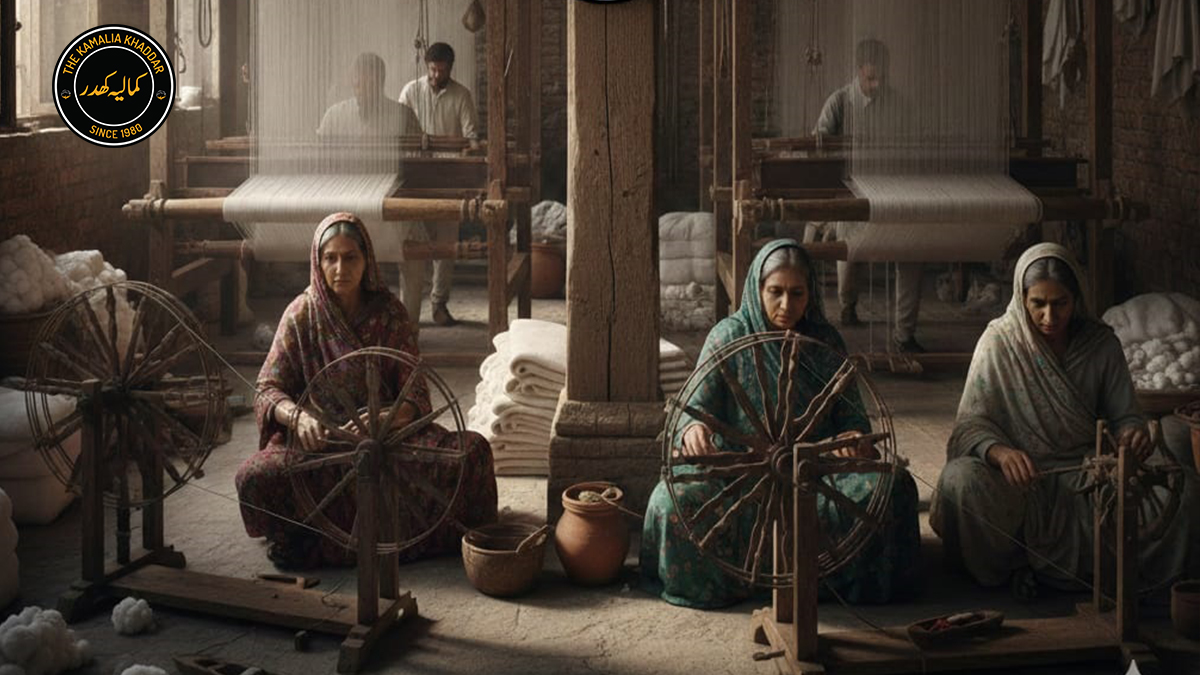
It all began with the cotton harvest. Locally grown, indigenous cotton—often referred to as “Gorve Cottons” —was the starting point. Once the fluffy bolls were picked, the next step fell to the women of the household.
Using the iconic Charkha (spinning wheel), these women would transform raw cotton fibers into fine, continuous yarns. This was not a rushed job; it was a daily ritual. The rhythmic whir of the charkha was the soundtrack of rural life, turning the “gorve” cotton into the fundamental building block of the fabric. This manual process ensured the thread had a slight, natural unevenness that would later give the fabric its unique, breathable texture.
The “Jalahya” and the Art of “Dasi Lock” Dyeing
Once the yarn was spun, it was handed over to the master—the Jalahya (weaver). But before weaving could begin, the yarn often needed color. In an age before chemical dyes, the Jalahya relied on nature. They dyed the yarns using traditional techniques, often referred to as “Dasi Lock” methods. This involved using natural sources like roots, leaves, and mud to fix the color to the thread, ensuring the dyes were deep, earthy, and long-lasting.
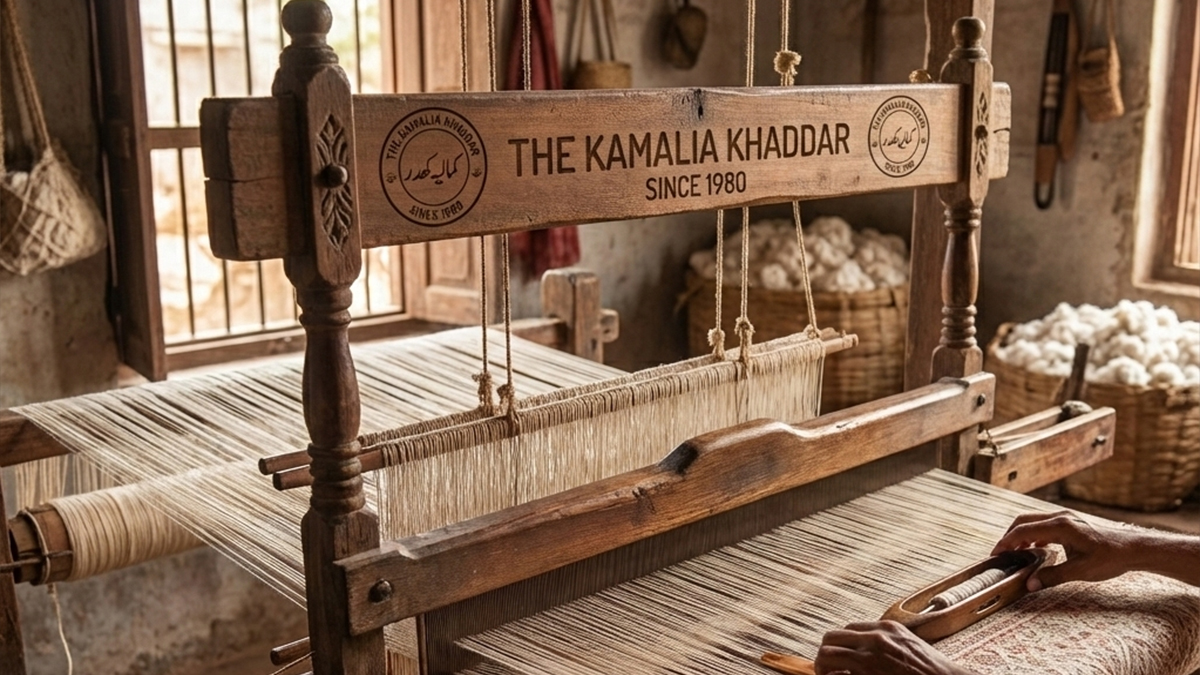
Finally, the prepared yarn was set upon the handloom, known locally as the Khaddee. The Jalahya would work the Khaddee with a coordinated dance of hands and feet, passing the shuttle back and forth to create the fabric. This was slow, meticulous work—a far cry from the speed of modern mills—but it produced a cloth with a soul, a fabric that “breathed” and carried the mark of its maker.
What Were the Original Colors of Khaddar?
One of the most remarkable aspects of pre-1980 khaddar was its limited, yet deeply authentic, color palette. Long before Pantone shades and digital printing, the fabric’s color came directly from the earth.
Cotton, in its purest form, does not just grow white. It has two primary natural colors:
- Off-White: The creamy, natural hue of most cotton.
- Camel or Brown: A beautiful, warm brown color that is the “genuine color of cotton.”
This brown variant, often called camel color, was (and still is) highly prized. It is naturally pigmented, meaning it doesn’t require dyeing and, in some cases, even deepens with washing and sun exposure. For decades, if you wanted khaddar, your choice was simple: the pure, natural off-white or the rich, earthy brown (camel). This wasn’t a limitation; it was a signature of authenticity.
How Has Kamalia Khaddar Evolved from 1980 to Today?
The formal establishment of Kamalia Khaddar as a brand in 1980 marked a pivotal moment. It signified a shift from a purely local, household craft to an organized industry ready to share its heritage with the nation and the world
. While the soul of the fabric remained the same, the methods and offerings evolved with time.
From Manual Threads to Modern Machines
The most significant change came in yarn production. For centuries, the charkha was the only way to spin thread. As the brand grew, the hands of the old women at the charkha were gradually supported by machines. Today, the vast majority of threads used are made on machines. This shift was essential for meeting the massive demand for kamalia khaddar fabric while maintaining consistency and strength.
However, the brand has kept its roots intact by offering two distinct types of fabric:
- Handmade Khaddar: Produced on traditional handlooms (Khaddi) to preserve the classic, textured feel that purists love.
- Machine-Made Khaddar: Woven on modern power looms to create a more uniform texture that is easier to stitch and maintain, making it accessible for everyday wear
- .
Innovations in Weaves, Colors, and Finishes
Over the decades, Kamalia Khaddar has introduced numerous innovations. While the early days offered only the two natural shades, today’s collections feature mature, earthy tones and a wide range of natural-looking dyes that complement the fabric’s rustic charm.
The product line has also expanded to cater to modern tastes. Alongside the classic khaddar, the Kamalia Khaddar factory now produces specialized weaves like Wash n Wear (for a softer, low-maintenance feel) and Kamalian Boski (a luxurious blend with a silky touch)
. These innovations ensure that the heritage fabric fits seamlessly into contemporary lifestyles.
Is Khaddar a Good Choice for Pakistan’s Climate?
Absolutely. This is where the genius of pure cotton, specifically kamalia khaddar, becomes undeniable. Its unique properties make it a four-season fabric, ideal for the diverse Pakistani climate.
- For Summer: Khaddar is highly breathable. Its textured weave allows air to circulate freely, keeping the body cool and wicking away moisture. It feels light and comfortable, even on the hottest days.
- For Winter: When woven into a tighter, heavier variant, khaddar becomes a natural insulator. It traps body heat, providing substantial warmth. A khaddar kameez, paired with a classic shawl (the modern version of the traditional “Chaddar”), is a timeless winter look.
- For Mid-Seasons: Its temperature-regulating nature means it adapts to the fluctuating temperatures of spring and autumn, providing comfort throughout the day
- .
How to Identify Original Kamalia Khaddar Fabric?
Given its popularity, imitations are common. To ensure you are getting authentic original kamalia khaddar, look for these signs:
- The Source: The most reliable method is to purchase directly from the official Kamalia Khaddar website or authorized channels. This cuts out the middleman and guarantees authenticity.
- The Feel: Genuine khaddar has a characteristic texture. It feels substantial and strong in the hand. While the “Wash n Wear” variety is softer, it should still have a sturdy quality, not a flimsy, synthetic feel.
- The Behavior: Authentic cotton khaddar breathes. Hold it up to the light; you should see tiny pores that allow air to pass through. It will also soften beautifully with every wash, gaining character over time.
- The Label: Look for the official branding and the heritage mark, connecting it to the legacy since 1980
- .
Why is Kamalia Khaddar a Smart, Long-Term Investment?
In a world of fast fashion, choosing kamalia khaddar is a decision to invest in quality. It is a fabric built on the principle of long-term value rather than seasonal trends.
- Unmatched Durability: Khaddar is a workhorse. It withstands the rigors of daily wear, frequent washing, and the demands of an active lifestyle far better than delicate, synthetic blends.
- Cost-Effectiveness: Because it lasts for years, the cost-per-wear of a khaddar suit becomes incredibly low. You are not just buying a piece of clothing; you are buying years of reliable use
- .
- Timeless Style: The fabric’s natural, understated elegance never goes out of fashion. It transcends fleeting trends, making it a permanent staple in any wardrobe.
- Comfort and Health: As a 100% natural fiber, it is skin-friendly, hypoallergenic, and perfect for our climate, ensuring you don’t have to compromise comfort for style.
Conclusion: A Legacy of Trust Woven Since 1980
The story of Kamalia Khaddar is not just a story of fabric; it is a story of Pakistan. It is a narrative that begins with the Jalahya weaver, the women at the charkha, and the earth-toned cottons of the Kamalia region. From making humble Daris, Khalis, and Chaddars for the local community, it has grown into a brand that represents heritage, authenticity, and unwavering quality since 1980.
While machines have rightfully taken over some tasks to meet modern demand, the spirit of the original Khaddi lives on in every thread. The commitment to pure cotton, the respect for natural colors, and the focus on durability remain unchanged.
When you choose fabric from the Kamalia Khaddar factory, you are choosing more than just a suit. You are choosing a piece of history, a garment built for comfort, and a legacy of trust that has been carefully woven for over four decades. It is an invitation to dress in the confidence of authenticity and to experience the timeless appeal of a fabric that truly feels like home.